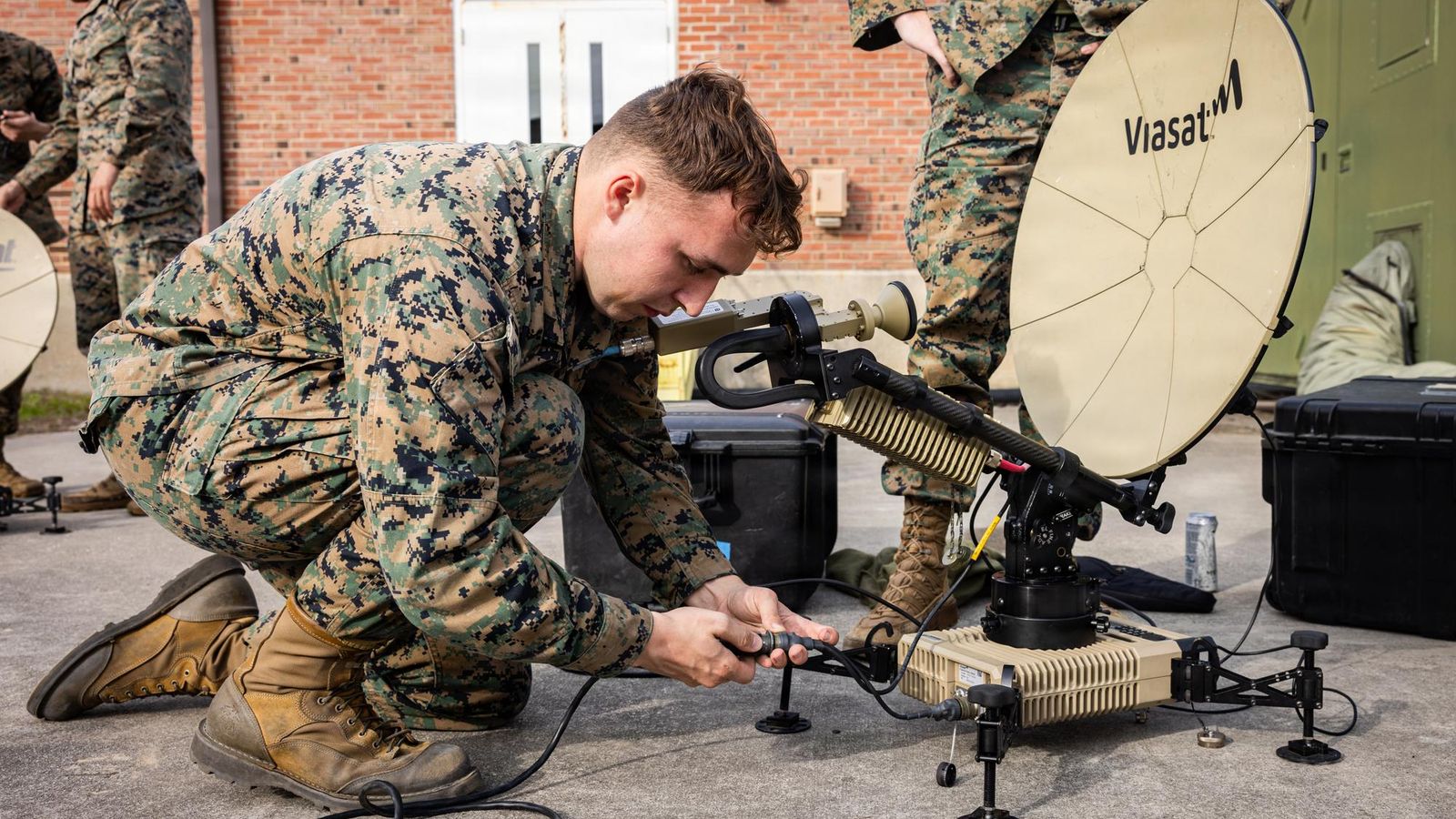
Ukrainian Starshield terminals stopped functioning above roughly 160 kilometers per hour sometime after midnight on October 14, 2026, according to Ukrainian officials who said the change arrived without warning. The cutoff hit a category of hardware the Pentagon pays SpaceX to operate for Ukraine's military: terminals mounted on fast moving platforms, including the interceptor drones Kyiv flies against Russian Shahed-type attack drones.
A Cap With Real Combat Effects
President Volodymyr Zelenskyy said the restriction cut the usable speed of Ukraine's interceptor drones to around 70 kilometers per hour, far short of the roughly 450 kilometers per hour needed to catch the jet-powered Shahed variants Russia has fielded at speeds above 400 kilometers per hour. Zelenskyy told broadcaster Piers Morgan that people were dying as a result, though he stopped short of naming who ordered the change. Secretary of State Marco Rubio initially described the disruption as a technical issue, a characterization Zelenskyy disputed after Kyiv said it tested Starlink terminals in the European Union and found no comparable speed cap.
Conflicting Accounts of Who Pulled the Lever
Accounts of who ordered the restriction diverge. Reuters reported that Pentagon leadership received instructions from within the White House to slow the service. The Wall Street Journal later reported, citing people familiar with the matter, that Elon Musk personally ordered the cap after a phone call with President Trump. Musk wrote on X that "any limits on speed or usage are decided by the US military and ultimately POTUS," placing the decision with the government rather than with SpaceX. Trump denied directing the change, and Rubio said the administration had no advance knowledge of it and had not requested it.
Partial Fixes, Persistent Gaps
Ukraine's government said service had been restored to speeds above 400 kilometers per hour in most areas by October 23, though CNN reported that at least one unit operating near Donetsk remained capped at 160 kilometers per hour as of that date. Musk later said on social media that SpaceX had closed what he called a loophole, a characterization Kyiv rejected.
Congress Wants the Chain of Command Mapped
Nine US senators, Democrats Jeanne Shaheen, Dick Durbin, Richard Blumenthal, Chris Coons and Jack Reed alongside Republicans Thom Tillis, Susan Collins, Lisa Murkowski and John Cornyn, wrote to Pentagon Inspector General Platte Moring III on October 15 asking whether Defense Department officials or SpaceX "directed, authorized, approved or had advance knowledge" of the restriction. The letter set a November 1 deadline for a status briefing. A separate letter from Senate Foreign Relations Committee Democrats pressed SpaceX directly for "the respective technical, contractual, and operational authorities retained by SpaceX and the U.S. government" over Starshield.
A Single Point of Control
Neither letter has drawn a public response as of this writing, and the Pentagon has not disclosed what technical mechanism, if any, lets a government agency or a contractor alter in-motion speed limits on a fielded military satellite terminal without a documented change record. The episode lands as the Space Force continues evaluating a multi-vendor hybrid satcom architecture meant to reduce the Pentagon's reliance on any single commercial provider for front-line connectivity.
First reported by the Wall Street Journal and Reuters, with the Senate inquiry first detailed by The Hill.