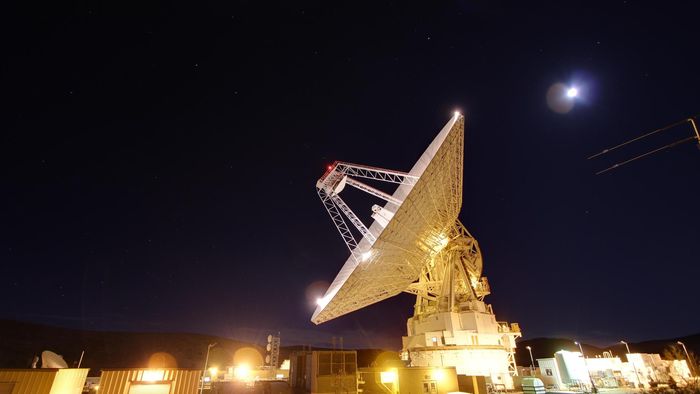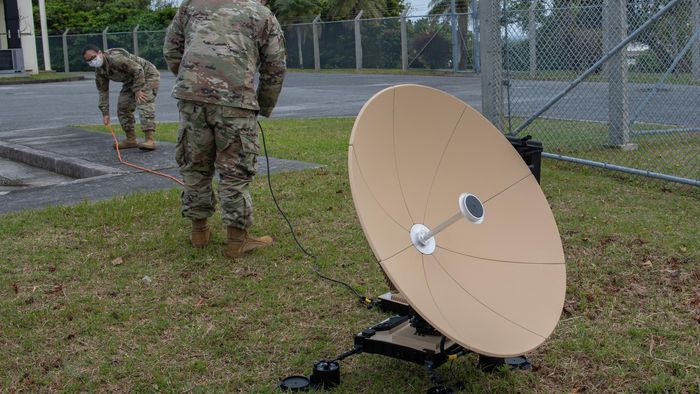
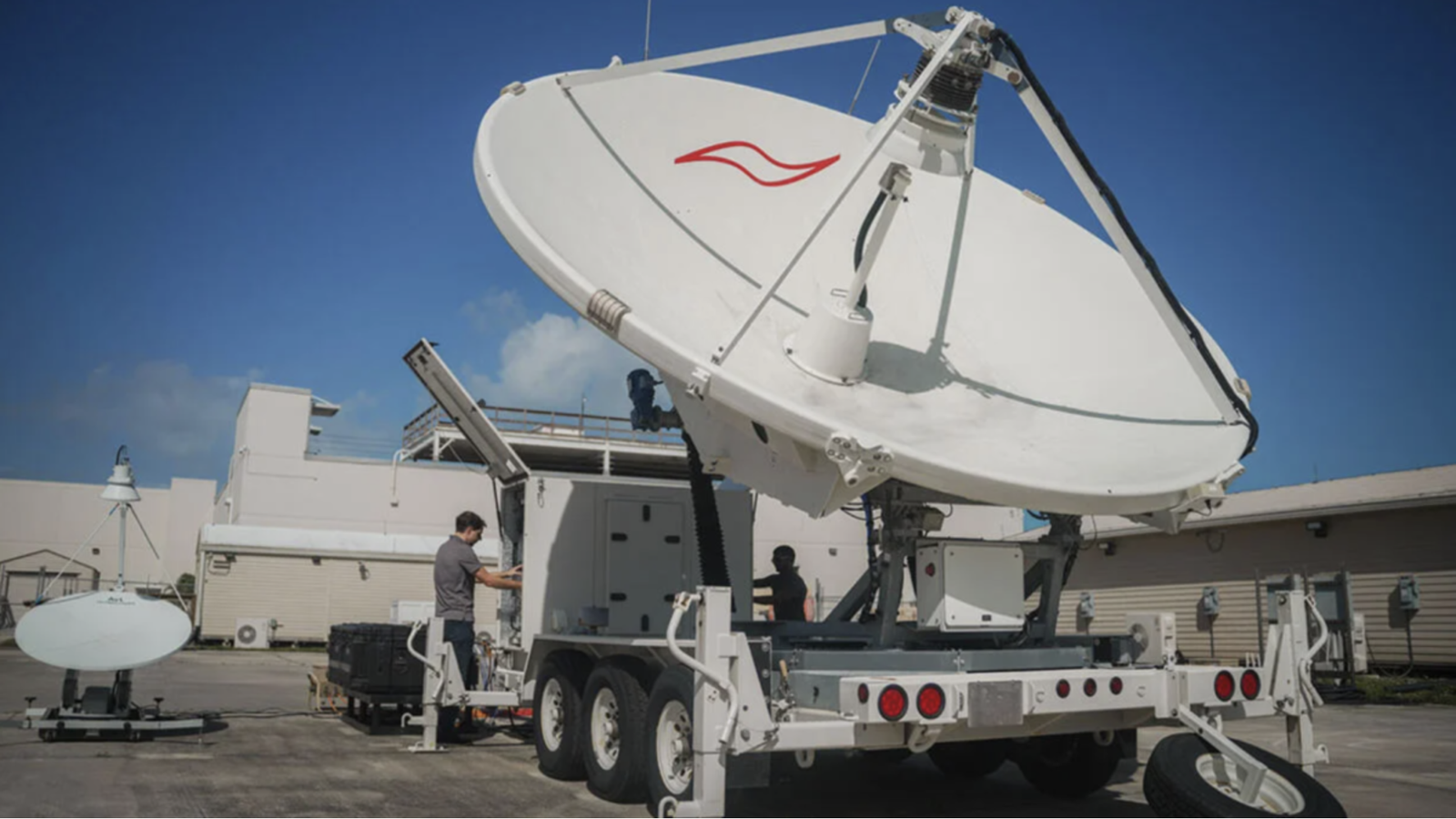
The U.S. Space Force's Combat Forces Command formally accepted the Meadowlands Counter Communications System for operational use on June 8, 2026, putting a new ground-based satellite jammer into the hands of Mission Delta 3, the unit responsible for space electromagnetic warfare. Built by L3Harris, Meadowlands lets operators disrupt an adversary's satellite uplinks and downlinks with a targeted radio-frequency signal, producing effects the Space Force describes as reversible: normal communications resume once the jamming stops, and no orbital debris is created.
Two decades of upgrades to the Space Force's only acknowledged jammer
Meadowlands is the newest version of the Counter Communications System, which the Defense Department first fielded in 2004 and has upgraded repeatedly since, most recently through the CCS 10.2 configuration completed in March 2020, according to Breaking Defense. It remains the only offensive electronic warfare capability the Space Force has acknowledged publicly. The service currently runs 11 CCS units through a mix of Space Force and Air National Guard personnel stationed at strategic locations, per The Defense Post, and expects the Meadowlands fleet to grow to 32 units, wheeled and air-transportable enough to load onto a single C-130 Hercules, according to New Atlas. L3Harris delivered the first Meadowlands production unit on December 11, 2025, roughly six months ahead of the delivery schedule the company had set earlier that year, per Air & Space Forces Magazine.
The feature getting less attention: remote command and control
Coverage of Meadowlands has centered on its mobility: the number of transport cases needed to move the system has dropped from 23 to seven, according to SpaceNews. Less scrutinized is the emphasis officials have placed on remote command and control, letting operators run the jammer without physically sitting at the antenna and turning knobs, as a Space Systems Command program executive described to Breaking Defense during the system's earlier testing milestones. Col. Angelo Fernandez, commander of Mission Delta 3, has said the system is particularly well suited to jamming long-haul communications of the kind used in austere environments such as deserts, according to Air & Space Forces Magazine. Paired with the open architecture the system uses for software updates, the shift toward centralized, remote operation turns a weapon meant to sever an adversary's communications link into a networked system with its own link to protect.
A jammer that has to defend its own uplink
A ground unit that can be commanded remotely and receive software updates through plug-and-play interfaces is exposed to the same category of attack it is built to inflict on an adversary: intercepted or spoofed operator commands, or a corrupted update pushed through the modular software stack, which runs on a mix of CUDA, C/C++, and Java, according to Military & Aerospace Electronics reporting on an earlier phase of the program. None of the public reporting on Meadowlands' operational acceptance addresses how that command channel is authenticated or how updates are validated before reaching a fielded unit. The Space Force has been open about the system's electromagnetic warfare functions; it has said far less about the security of the network that operates it.
What the budget says about how central this has become
The Space Force's fiscal 2027 budget request asks for $21 billion for what it calls "space control" programs, the term it uses for the offensive and defensive measures it takes to secure the domain, a 158 percent increase over fiscal 2026, according to Air & Space Forces Magazine. Of that, $450 million is earmarked for Meadowlands production in fiscal 2027 alone, with another $605 million projected for fiscal 2028 through 2031. The request also includes roughly $40 million for further Counter Communications System research and development, about $29 million of which would fund an effort called the Electromagnetic Threat Integration Program, aimed at developing new jamming software and electronic warfare tactics, plus funding to stand up five new space electronic warfare tactical operations centers.
The adversary environment driving the spending
The investment reflects how the Space Force frames its competitive position against China and Russia. China's operational satellite fleet exceeded 1,060 by mid-2025, with hundreds dedicated to intelligence, surveillance, and reconnaissance, according to the U.S.-China Economic and Security Review Commission's 2025 annual report as cited by Defense News. The same report noted that a Space Force general recently characterized an incident from the past year as "satellite dogfighting," part of a broader Race to Resilience initiative the service says aims for battle-ready architectures. Elsewhere in the service, officials have described trying to "shift that cyber resiliency to the left" by building security requirements into acquisition earlier, a Space Systems Command cyber and data director told Federal News Network — the same tension Meadowlands' own command-and-control design illustrates on a smaller scale.
Export plans widen the same question
L3Harris won an initial development contract for five Meadowlands units in January 2019, followed by a production contract in October 2021 covering more than 20 units including training systems, according to Breaking Defense. The company has also confirmed the Meadowlands configuration is already cleared for foreign military sales to selected allied partners, according to Army Recognition's reporting on the program's first production delivery. Once multiple countries each operate their own units, keeping firmware versions, authentication credentials, and network access consistent across every operator's copy of the system becomes a supply-chain and configuration-management problem in its own right, layered on top of the electronic warfare mission the system was built to perform.
News first reported by SpaceNews and Air & Space Forces Magazine.