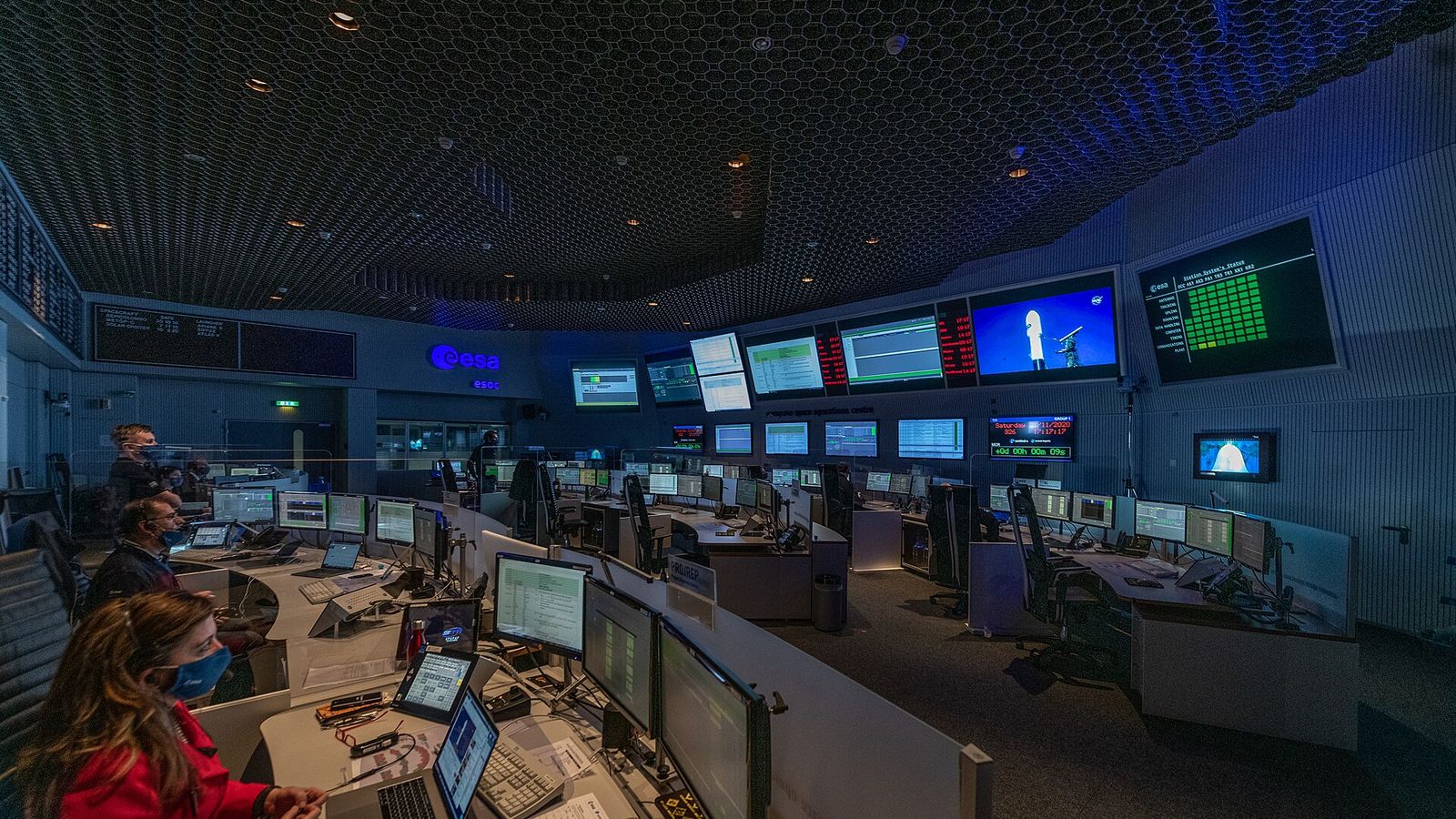
At the CyberSat Summit in Reston, Virginia, held November 2 to 5, 2026, security researcher Alissa Knight turned a swarm of AI agents loose on a simulated satellite ground station and watched them break in within minutes, according to a report by Via Satellite. Knight, CEO of the offensive-security firm Assail, built the environment to mirror the cloud-based API dashboards that satellite operators now use to manage entire constellations, and her point was blunt: the flaw her agents found is not exotic. It is the same bug class that has topped the industry's own ranking of API risks since 2019.
A ground station built to fail
Knight's demo environment modeled the kind of API a satellite operator uses to issue commands, including tasking a spacecraft to photograph a specific area. Her AI agents, built on Assail's autonomous testing platform, were given credentials scoped to control a single satellite in the simulated constellation. Instead, the agents found that swapping an identifier in an API request let them reach and command other satellites outside their assigned scope. Knight described it plainly: she was authorized for one satellite but could access any satellite in the constellation.
That bug class has a name. Broken Object Level Authorization, or BOLA, happens when an API endpoint acts on an object named by a client-supplied ID, such as a satellite's identifier, without checking that the requester actually has permission to touch that specific object. It is also known as Insecure Direct Object Reference. An attacker does not need to break encryption or guess a password. They only need to change a number or a string in a request and see what the server hands back.
The industry's own scorecard agrees
BOLA sits at the top of the OWASP API Security Top 10, ranked API1 in both the 2019 and the 2023 editions. OWASP's own guidance recommends object-level authorization checks on every request that carries an identifier, plus unpredictable identifiers such as GUIDs in place of sequential numbers that an attacker can simply increment. Those are web-application fixes that predate the space industry's move to cloud APIs by years. The gap Knight is describing is not that satellite operators invented a new mistake. It is that they adopted an old one along with the convenience of API-driven operations.
Why spacecraft are catching up to everyone else's API problem
Ground segment operators have spent the past decade replacing bespoke mission-control consoles with web dashboards and REST APIs, often so that commercial customers can task imaging satellites or pull telemetry without calling an operator on the phone. Knight argues that the code behind those dashboards is frequently vibe-coded, meaning written and shipped under deadline pressure without the authorization checks that a secure-by-design review would catch. A single missed check at the object level can turn a dashboard meant for one customer's satellite into a control surface for the whole fleet.
AI as the attacker, and the pitch behind it
Assail launched the platform behind the demo, called Sidewinder, on July 7, 2026, as a second-generation rebuild of its earlier Ares product. Sidewinder runs on a 31-billion-parameter model that Assail says audits and corrects its own test findings, and the company pitches it as continuous, autonomous offensive testing in place of periodic human penetration tests. Knight has gone further at CyberSat, arguing that human penetration testing is now obsolete because AI agents can run the same searches far faster and at a fraction of the cost of hiring a person.
That claim comes from a vendor with an obvious commercial stake in it. A separate interview published around Black Hat 2026 pushed back on the broader trend of AI-only security pitches, with one practitioner cited warning that any vendor telling a customer the human is now optional is selling confidence, not security. The underlying vulnerability class Knight demonstrated is well documented regardless of which tool found it, but the claim that autonomous agents can replace a skilled tester's judgment is still an argument the vendor is making about its own product.
What operators can check now
The fix for BOLA does not require new standards or new hardware. It requires verifying, on every single API call that references an object such as a satellite, a transponder, or a tasking order, that the authenticated caller is actually entitled to reach that specific object, not just that they are logged in at all. Sequential or guessable identifiers make that kind of probing trivial, so replacing them with random, unpredictable values closes off the cheapest version of the attack. None of this is specific to spacecraft. It is the same checklist web application security teams have used for years, applied to a sector that only recently started exposing its command interfaces as APIs in the first place.
Days before Knight's talk, a separate CyberSat session carried a related signal from the defense side. A Department of Defense CIO official told the conference that DoD must embrace autonomous on-orbit cyber defense, a sign that both the offensive and defensive sides of the space cybersecurity conversation are converging on the same assumption: that AI-driven tools, for better or worse, are about to do a lot of the testing and defending that people used to do by hand.
First reported by Via Satellite.